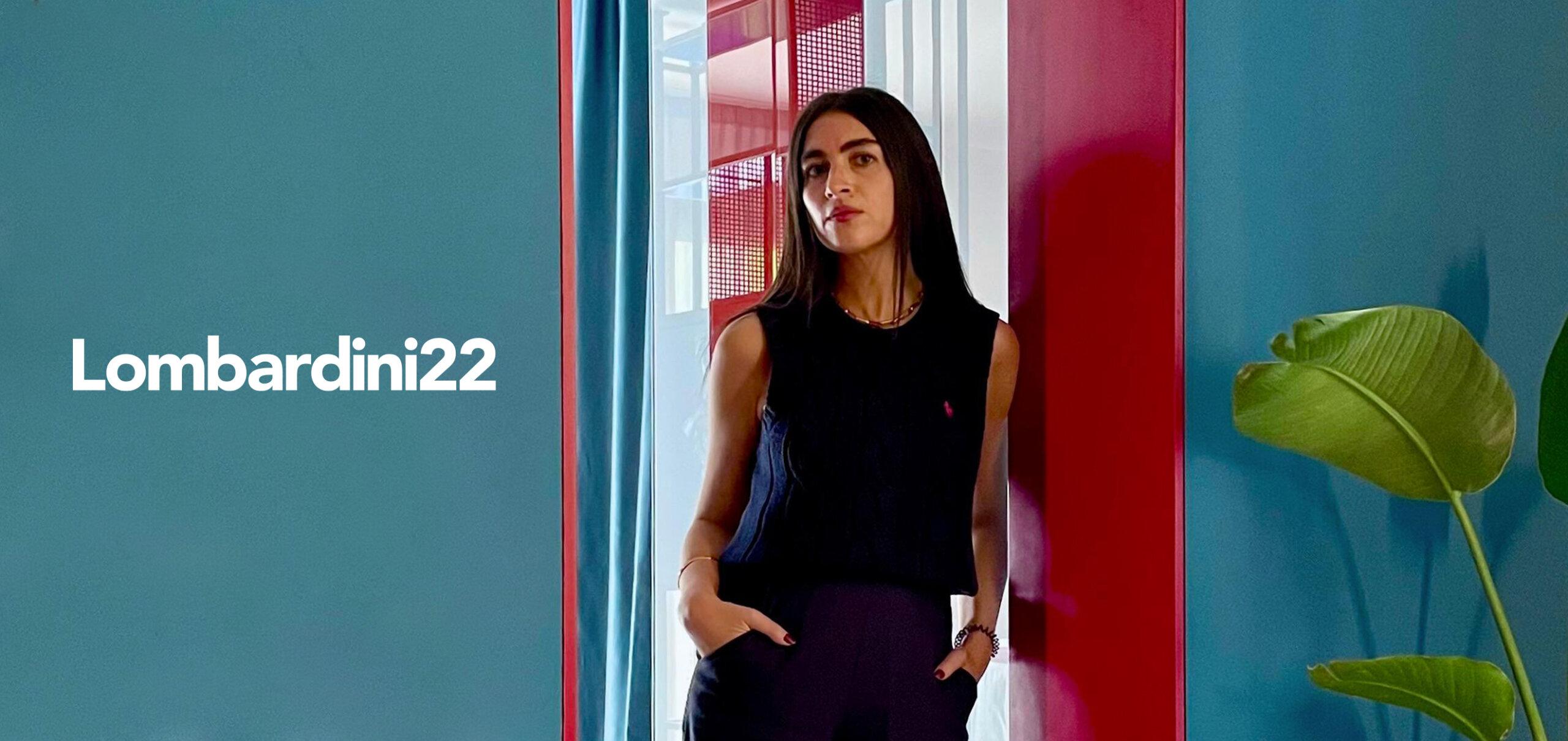
An Architect at Lombardini22 with experience across a range of sectors, Maria Giovanna Manfredi reflects on the delicate—yet essential—relationship between art and interior design, and on the value of dedicated, specialist expertise.
Tell us about your background and career journey
I’ve been with Lombardini22 for almost twelve years. It was my first job, and over time I have enthusiastically chosen to explore the diverse types of design the firm offers. Thanks to its transversal and multidisciplinary structure.
Structured across multiple business units, Lombardini22 is a stimulating environment full of learning opportunities. I started as an architect and interior designer in retail, then moved on to designing workspaces, including large-scale offices for major companies. That experience was perhaps the one that helped me grow the most. Both because of the caliber of clients and the responsibilities I was entrusted with.
Today, I work in the business unit dedicated to hospitality, where I’ve had the opportunity to deepen my understanding of the relationship between interior design and art.
How does art come into play within your interior design work?
Within Lombardini22 there is Artlane, which is not a business unit, but a cross-disciplinary collective made up of people with different professional backgrounds. Artlane’s aim is to use art to communicate, and this requires many skills: it is not just a question of aesthetics or curation, but often also requires technical support, urban planning permits, or assessments related to municipal regulations. In this sense, we are structured to handle very different needs.
Is there an example of a project where the relationship between art and interior design was most visible?
One of the projects I feel most connected to is Onirica, a suite within the eco-conscious MODE Hotel. Every decision was made with sustainability at the forefront—not only minimizing environmental impact, but also enhancing the well-being and overall experience of those who inhabit the space.
In this context, art is essential, shaping the emotional journey of the guest. Today, particularly in hospitality (but also in restaurants, retail, and boutiques), it’s no longer just about service: guests are increasingly focused on the experience itself, the memories a space leaves, and the desire to return or share it with others.
For Onirica, we collaborated with 5X Letterpress, a studio specializing in traditional letterpress techniques using vintage presses and movable type. The collaboration perfectly reflected the suite’s concept—Fellini-inspired circus motifs—and their own thoughtful approach to sustainability.
The result is a fully immersive narrative: wall ceramics, artworks, lighting, and even scents all contribute to an atmosphere that evokes cinema, the circus, and a sense of wonder.
What do you think about Cinquerosso Arte?
I think it’s crucial to have access to specialized expertise, like that provided by Cinquerosso Arte. Just as careful thought goes into selecting materials, furniture, woods, or ceramics, the same level of attention should be applied to art. Choosing a piece isn’t only about deciding what looks good—it’s about what truly suits the space, whether it’s a painting, an installation, a mural, or a sculpture. Sometimes a particular niche or corner lends itself better to one medium over another.
There are generally two approaches. In some cases, a work is commissioned specifically for a location, often through a kind of competition among artists. In other cases, one starts with existing works or collections. Cinquerosso Arte excels in this, offering tailored guidance to create a cohesive thread that resonates with the overall concept of the space.
It’s a relief to have specialized partners like them, who can guide the selection of both artwork and artist, because this requires a kind of expertise that architects alone don’t necessarily possess.