by Hotel Domani Editorial Team
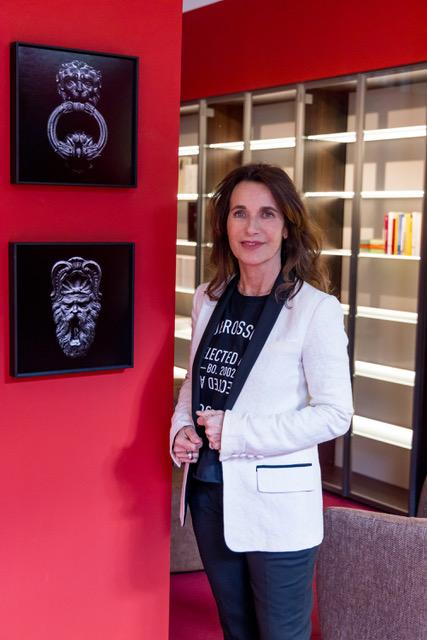
Francesca Fazioli is the founder of Cinquerosso Arte, a creative gallery bringing together photographers, fashion designers, product designers, architects, and artists. Conceived as a laboratory of ideas and cross-disciplinary dialogue, Cinquerosso integrates art as a core element of interior design projects, with a particular focus on the hospitality sector.
How do you collaborate with designers?
Architects turn to us when they want to introduce artworks that are fully aligned with the concept of their project. These are hotels with a strong, clearly defined identity, where every detail follows a coherent narrative thread. Art must become part of that story—integrating seamlessly and acting as a natural extension of the overall vision.
When do you select the artworks?
Our selection starts well before the project begins, drawing from our curated catalogue. We carefully select artists who have a clearly defined artistic vision, a conscious and consistent style, and something genuinely authentic to express. we collaborate closely with the architect to identify the artworks that best resonate with the project’s concept.
Do you consider the interior designer’s vision, the hotel’s identity, brand, and guest profile?
Absolutely. A hotel is not an art gallery—it’s a space with its own personality and a specific audience. Our artwork always starts from the interior design project, closely aligned with the brand and the target guests. Artworks are chosen to enhance the guest experience and to reinforce the hotel’s narrative coherence.
Is it more consultancy or co-creation?
It’s artistic consultancy. We don’t make “art hotels,” but we use art to balance aesthetics, emotion, and narrative, providing works that are beautiful and purposeful. We often select high-quality, limited-edition reproductions that retain artistic value and ensure cost-effectiveness—a key element of our approach.
Examples?
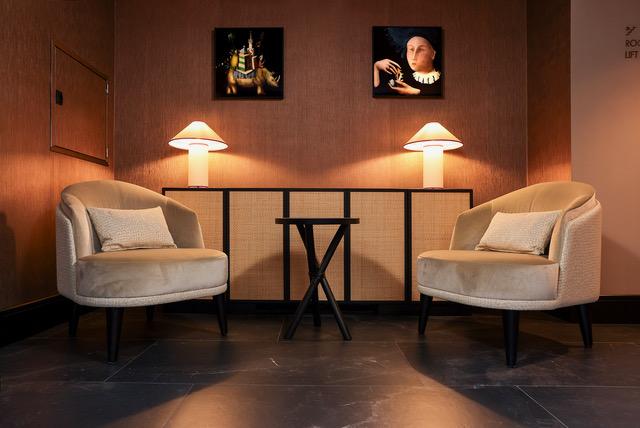
At the U-Visionary Hotel in Venice, designed by Daniele Chiocchio around the theme “Venice as a bridge between East and West,”our selections perfectly reflected this narrative: photographs by Icaro, mixed media artworks by Giulio Rigoni, and mixed media pieces by Luca Brandi evoked the suspended atmospheres between lagoon and Orient, amplifying the hotel’s distinctive identity.
Do you receive feedback on the impact of your work on the hotel’s reputation?
The feedback has been very positive—from architects as well as investors—although measuring the impact on guest satisfaction is more challenging. That said, the theme of “Art and Hospitality” is more relevant than ever: when we started, it seemed like a niche with little future, and now it has become a focal point at the industry’s leading events.
How do you envision the future of the relationship between art and hospitality?
Personalization, already a well-established trend, will shape the connection between art and hospitality. The hotel of the future will need to offer meaningful experiences aligned with the values of its guests. The Mode Hotel in Rimini, with its focus on sustainability, is another example: the artworks create harmony while reinforcing the ethical value of the project. Art is not just aesthetics—it’s a language that gives meaning to the spaces we inhabit.