Sign up for our newsletter and receive a 10% off
Send a gift card to your loved ones!
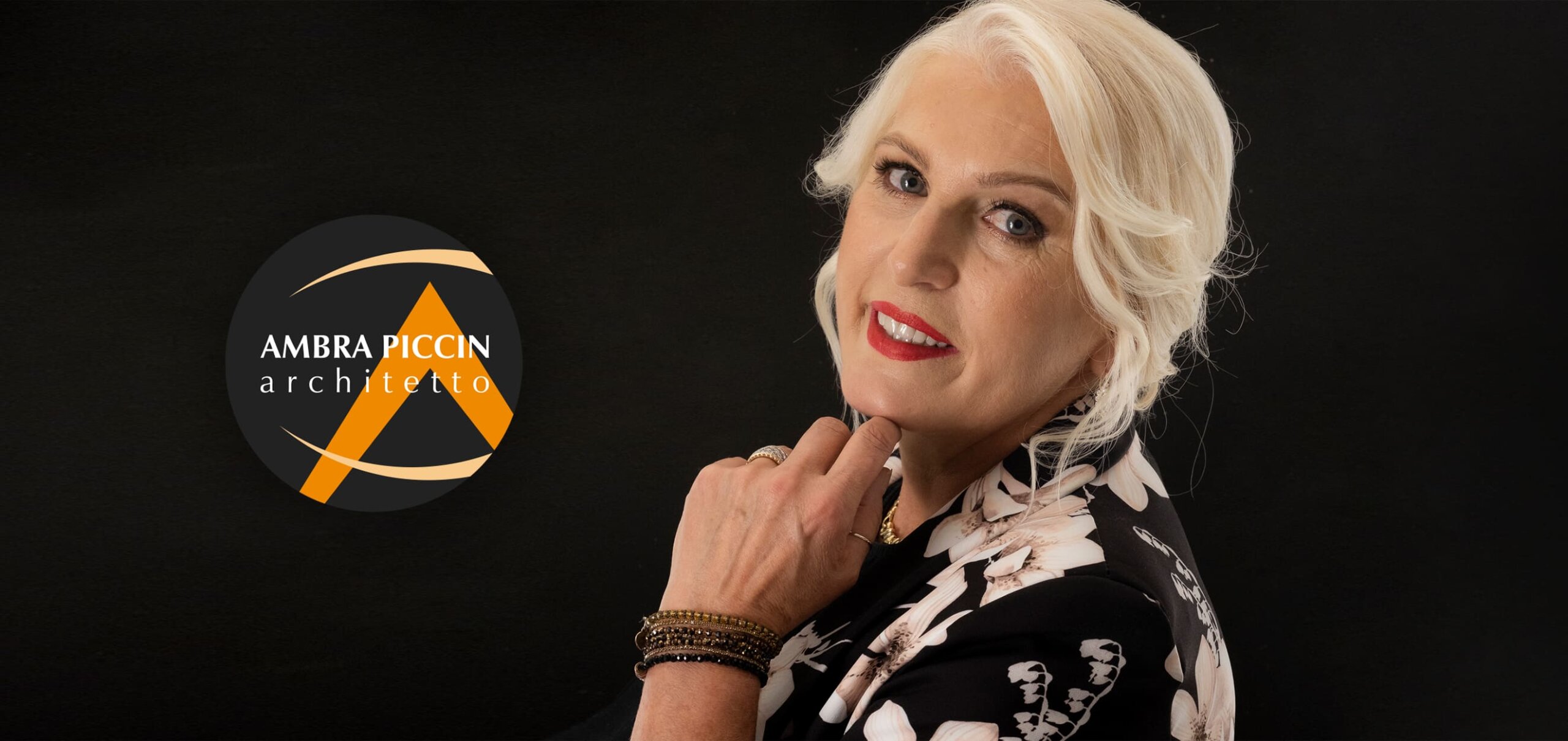
ambra piccin architetto cortina d'ampezzo

Ambra Piccin – Different client, the same passion for beauty

From luxury residences to hotels, architect Ambra Piccin creates spaces where indoor and outdoor environments flow seamlessly into one another, with a distinctive focus on the interplay between architecture and art.

Could you tell us about your professional journey?

I was the first female architect to open a studio in Cortina d’Ampezzo, in 1991. It has been a wonderful journey, one that over time has allowed me to build a well-established practice. Today, with offices in Cortina, Milan and Venice, my firm is the largest in the area, bringing together a multidisciplinary team of professionals, including architects, engineers and technical specialists across various fields.

I focus particularly on complex architectural projects, which I also coordinate as project manager, from the initial idea through to completion and handover. We work on luxury residences, hotels, restaurants and hospitality spaces: different types of projects, all united by the same attention to quality and to the people who will experience these environments.

Over the years, we have expanded our reach, working throughout the Alpine region, including across national borders, and in various parts of Italy, not just in ski resorts. Today, we are increasingly working in smaller towns and lesser-known areas that are experiencing a period of rediscovery. Alongside major cities, there is growing interest in restoring and enhancing smaller destinations and inland areas, places rich in charm and potential.

What is the philosophy behind your studio’s work?

For us, it is essential to establish a strong understanding with our clients and translate their needs into a design that is in harmony with its setting and the people who will inhabit it. Over time, our client base has changed considerably.

In the past, we worked mainly with families looking to renovate their homes or build a second residence as a personal retreat. Today, our clients are much more diverse. In Italy, an increasing number of foreign investment funds are investing in real estate, particularly in the restoration and redevelopment of hotels. Italy has an extraordinary wealth of hotel properties, even in lesser-known destinations. These investors are looking for opportunities to enhance the value of these properties, with a growing focus on the quality of hospitality and the experiences offered to travellers.

Today, travellers are looking for more than just an exclusive or luxurious holiday. They also seek an authentic connection with the landscape and nature. This influences our design choices: we create large windows that frame the surrounding views, as well as loggias and terraces that allow guests to enjoy outdoor spaces and connect with the natural environment.

What role does art play in your projects? How does the dialogue between architecture, interior design and art take shape?

Here too, much depends on the client and the intended purpose of the project. In private residences, families often have specific artistic preferences and want to personalise their interiors with paintings and artworks that reflect their own tastes and sensibilities.

In Cortina, where property values are particularly high, many homes are also spaces for entertaining and hosting guests. The pursuit of beauty and quality is therefore central. The homes we design today often feature contemporary artworks, sometimes selected in collaboration with local galleries.

On occasion, galleries make artworks available to us so that we can assess how they might fit within the interiors. I believe that an artwork should not simply be beautiful; it should also have a meaningful connection with the space in which it is placed. Light, colours, materials and the proportions of the room all need to be considered.

Architecture should help enhance the artwork, just as the artwork should engage in a dialogue with the space around it. In the hotel sector, art also helps define a property’s identity and give its spaces a distinctive character. The selection of artworks needs to take into account the experiences of a diverse, often international, clientele and therefore follows different criteria from those applied to a private residence.

How did you first come across Cinquerosso Arte?

I first came across Cinquerosso Arte at UNFOLD.zone events, which focus on architecture, hospitality and luxury residences. These events offer valuable opportunities to meet and share a passion for beauty, exceptional spaces and quality design. I find Cinquerosso Arte’s decision to specialise in the hospitality sector particularly interesting. A gallery that understands the specific needs of hospitality can be a valuable partner for architects like us, helping us select artworks that are in harmony with the identity of the spaces and the guest experience.
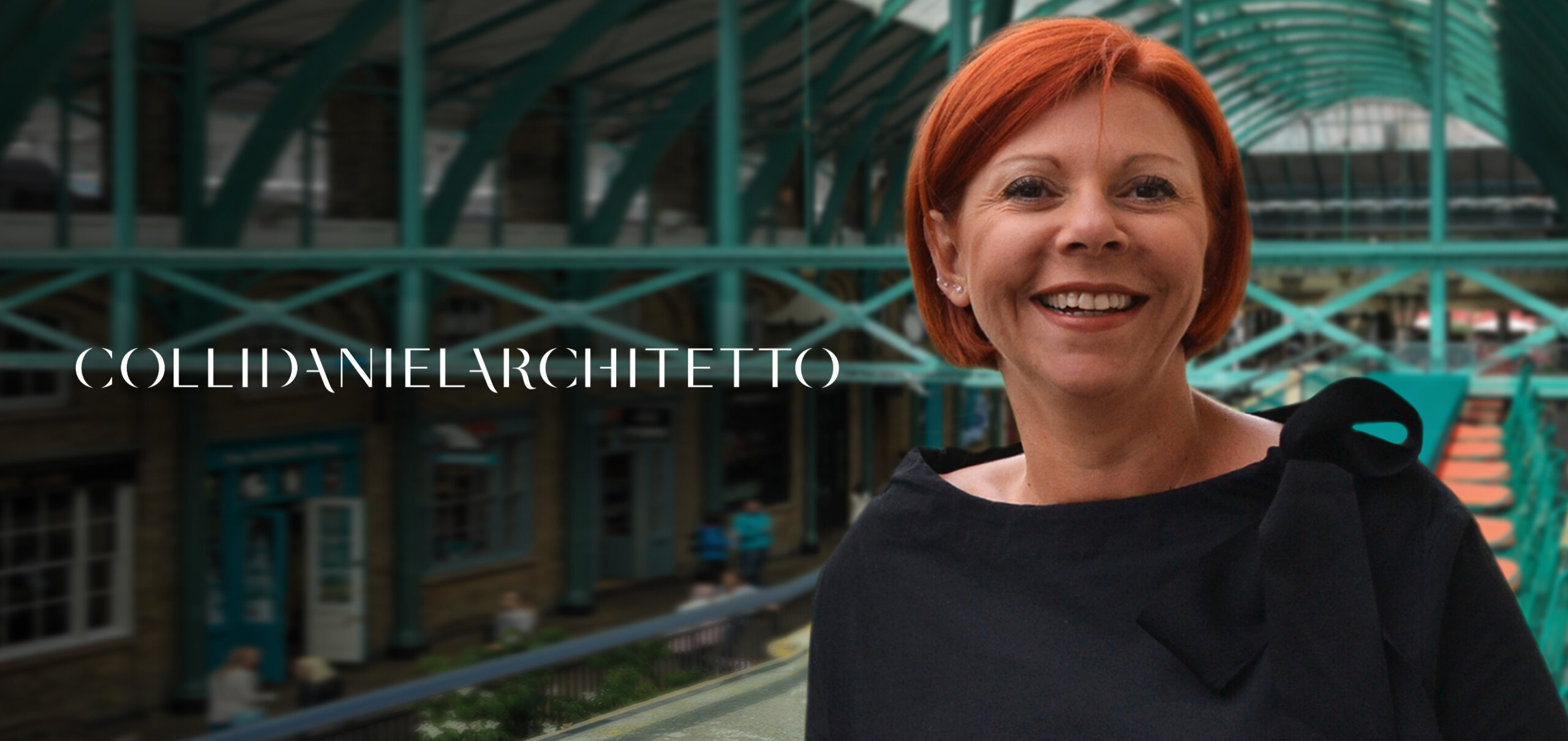
Read the interview with Daniela Colli!

daniela colli

Daniela Colli: Every project is a contemporary spatial narrative

Daniela Colli began her career working on major railway stations across Italy. Today, her studio focuses primarily on hospitality projects: spaces defined by movement and transition, where making people feel welcome and creating a memorable experience is essential, with art playing its part.

Daniela, can you tell us how you came to work in interior design and hospitality?

I’m originally from Tuscany, but Rome has become my home. I graduated in Florence and went on to complete a master’s degree in London, initially planning to stay abroad. I then began collaborating with several Rome-based studios and major organizations such as Grandi Stazioni Retail S.p.A., working on the redevelopment and design of railway stations. It was an incredibly formative experience.
I was very young and suddenly found myself working on projects of considerable scale. At a certain point, almost by chance, I also started working in interior design, never imagining it would eventually become the core business of my studio. It all began with a few Italian-style bar projects, which later led to a collaboration with Nicolò Marzotto.
Together, we developed the VyTA brand around a clear idea: to appeal to a new kind of traveler, one who values quality, attention to detail and the pleasure of taking time to pause.

The station was no longer seen simply as a place to pass through, but as a space to be experienced, where architecture, the quality of the offering and a strong sense of place could come together.
I went on to work on numerous restaurant projects, followed by my first experiences in the hotel sector, which today accounts for a significant part of the studio’s work. We now collaborate with major hotel groups as well as independent operators, working on projects at different scales and levels of complexity.

What’s the specific focus of your work today?

What matters most to us is the ability to turn every project into a contemporary spatial narrative, shaped around the brand’s identity and how we envision its guests experiencing the space. We aim to design places that do more than simply welcome people. They should evoke emotions, surprise and, above all, leave a lasting impression.

Therefore this is fundamental to our approach creating memorable spaces is a complex process, as it depends on the interplay of countless design decisions: the strength of the context, and the way materials, colour, light, proportions and details relate to one another. Our aim is to bring all these elements together and find a balance that creates distinctive atmospheres, while remaining true to the brand behind each project. As a result the goal is to give spaces a character that feels authentic and stands the test of time.

How important is research to you?

Research is central to our work. We dedicate a great deal of time to it, always striving to design something that hasn’t been done before, or to reinterpret familiar elements in unconventional ways. The same approach applies to our choice and use of materials. We are constantly looking for new surfaces, something that hasn’t been seen before, as well as colours that go beyond current trends. I believe this is essential to creating projects that are genuinely innovative and stand the test of time.

Does art play a role in your work?

Yes, absolutely. Whenever possible, we also oversee the selection and curation of artworks.
For me, it’s essential that art be an integral part of the project, rather than something introduced at a later stage. It should help shape the identity of a space and create a deeper connection between the environment and the people who experience it.

Unfortunately, artworks are still sometimes selected separately from the design process, without meaningful involvement from the architect or interior designer. This can create a disconnect between the art and the space.

How did you first come across Cinquerosso Arte, and what was your impression?

I first met Cinquerosso Arte at the Hospitality Design Conference in Milan and was immediately interested in their approach to the relationship between art and interior design.

What particularly struck me was their vision of art not as an added element, but as an integral part of the design process. This is very much in line with my own approach: art should be in dialogue with architecture, the space itself and the identity of the hotel.

I also find their focus on emerging artists particularly interesting. This is important from the client’s perspective, too, as investing in artworks by already well-established artists can often be financially unfeasible.

The opportunity to champion emerging artists therefore creates a very interesting balance between quality, artistic research and investment.

Read the interview with Mauro Santinato!

rizoma architetture Giovanni francheschelli studio

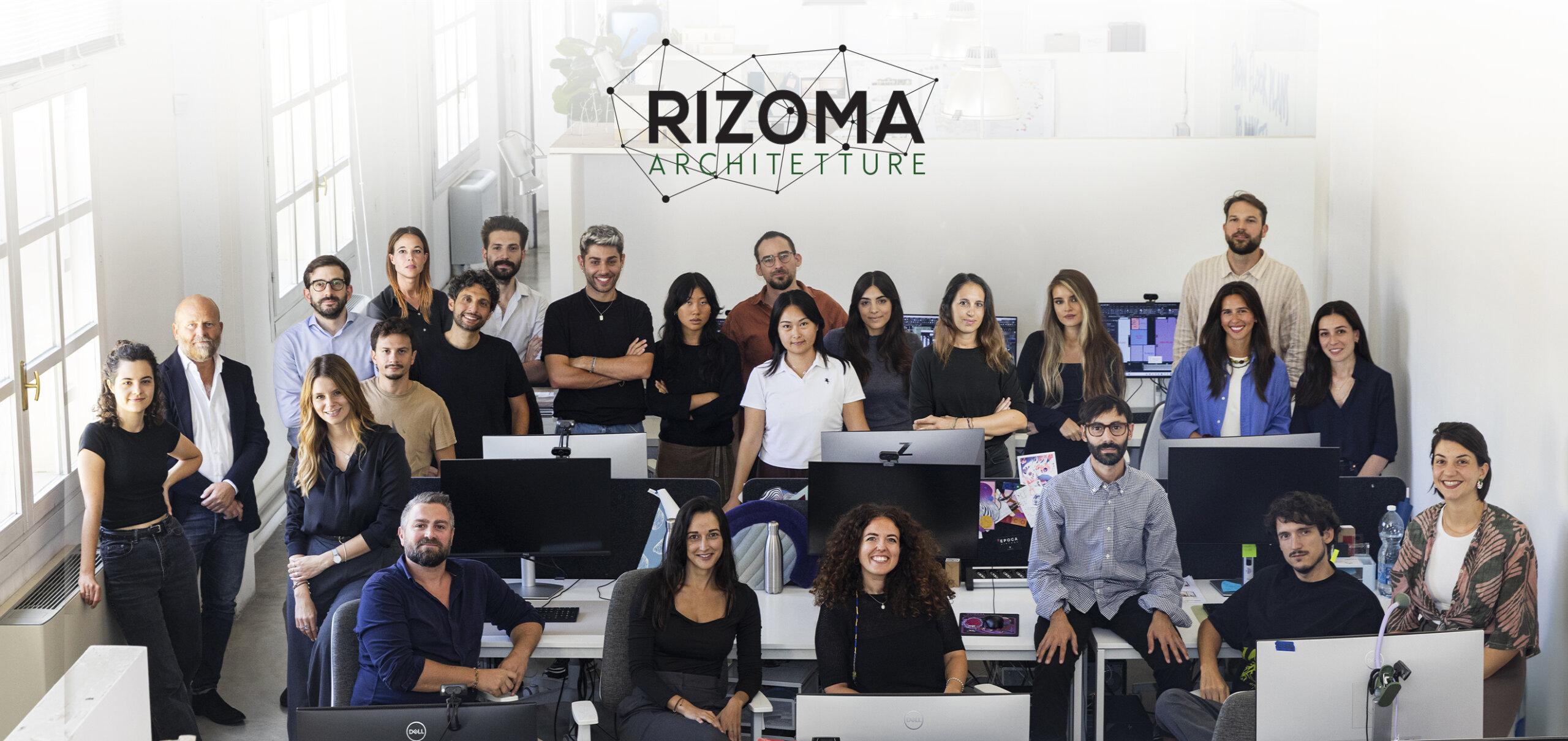
Giovanni Franceschelli – Art is an identifying element for our projects

At his studio, Rizoma Architetture, Giovanni Franceschelli shapes spaces around people and their needs. These are living environments where social interaction takes center stage and in this approach, art naturally finds its place.

Can you tell us about your academic and professional background as an architect? 

My education is divided between my university experience in Italy and a key period spent in Barcelona, where I attended a master’s program at the Polytechnic University of Catalonia.
It was a very intense two years, enriched by work and research experiences that deeply shaped me. When I decided to return to Italy, I felt a strong urge to bring everything I had learned in the Catalan context into a city like Bologna—different, yet with many resonances. 

Right from the beginning, my interest focused on public spaces, places of socialization and living. The university had also given me an international outlook, looking towards Europe and beyond.
Today, almost 25 years later, that vision is an integral part of the DNA of Rizoma Architetture: a studio with 32 professionals, two offices—Bologna and Milan—and a team composed of nine different nationalities. With a very young average age and a strongly international spirit.

What are the typical projects your studio works on?

For nearly 25 years we have been pursuing research on the spaces of living. Which over the past decade has translated into numerous hospitality and shared housing projects. We were among the first to develop a cohousing project in Italy, specifically in the Emilia-Romagna region. 
Today, our work explores different forms of living: from student housing for very young residents to senior living designed for people over 60. The common thread is always residential comfort and the quality of shared spaces, because we strongly believe in the value of social interaction.
We describe our approach as “design for people”, as our work is based on open and flexible visions that change each time according to the community that will inhabit the space. In other words, our projects are not defined by a recognizable style or a replicable formula, because every living environment is different.

What role does art play in your projects?

Over the past ten years, we have almost always involved artists in our hospitality and student housing projects. Collaborating with local realities or promoting open calls at an international level. 
This has happened in Florence, Milan, Rome and Turin. In Turin, for example, we worked on a student residence in the San Salvario neighbourhood, choosing to describe the context through an artistic narrative capable of addressing the critical issues of the area. A sort of fairy tale that could help improve the perception of a neighbourhood that was very problematic at the time.

For us, art – especially urban and contemporary art – is an “extra layer” that integrates with architecture and interior design. It is not decoration, but a tool for telling the story of the city and offering people a different perspective on the many transformations taking place. 

In this sense, art becomes both a space for reflection and an identity-defining element of the project, an exhibition open to the city. Speaking not only to those who inhabit the space but also to everyone who moves around it.

How did you come to know Cinquerosso Arte, and what do you think about the idea of making art accessible for hospitality?

I met Cinquerosso Arte at events related to the world of architecture, design and art. We immediately felt a great connection. I strongly believe in making art accessible in social spaces such as hotels, but also in student residences, which are mainly frequented by younger generations who are exposed to creative influences on a daily basis. Integrating architecture, art and interior design is a natural choice for me, consistent with my personal and professional journey. I am very happy about this collaboration and very confident that this will generate projects that combine design quality and cultural value. 

Read the interview with Maria Giovanna Manfredi!

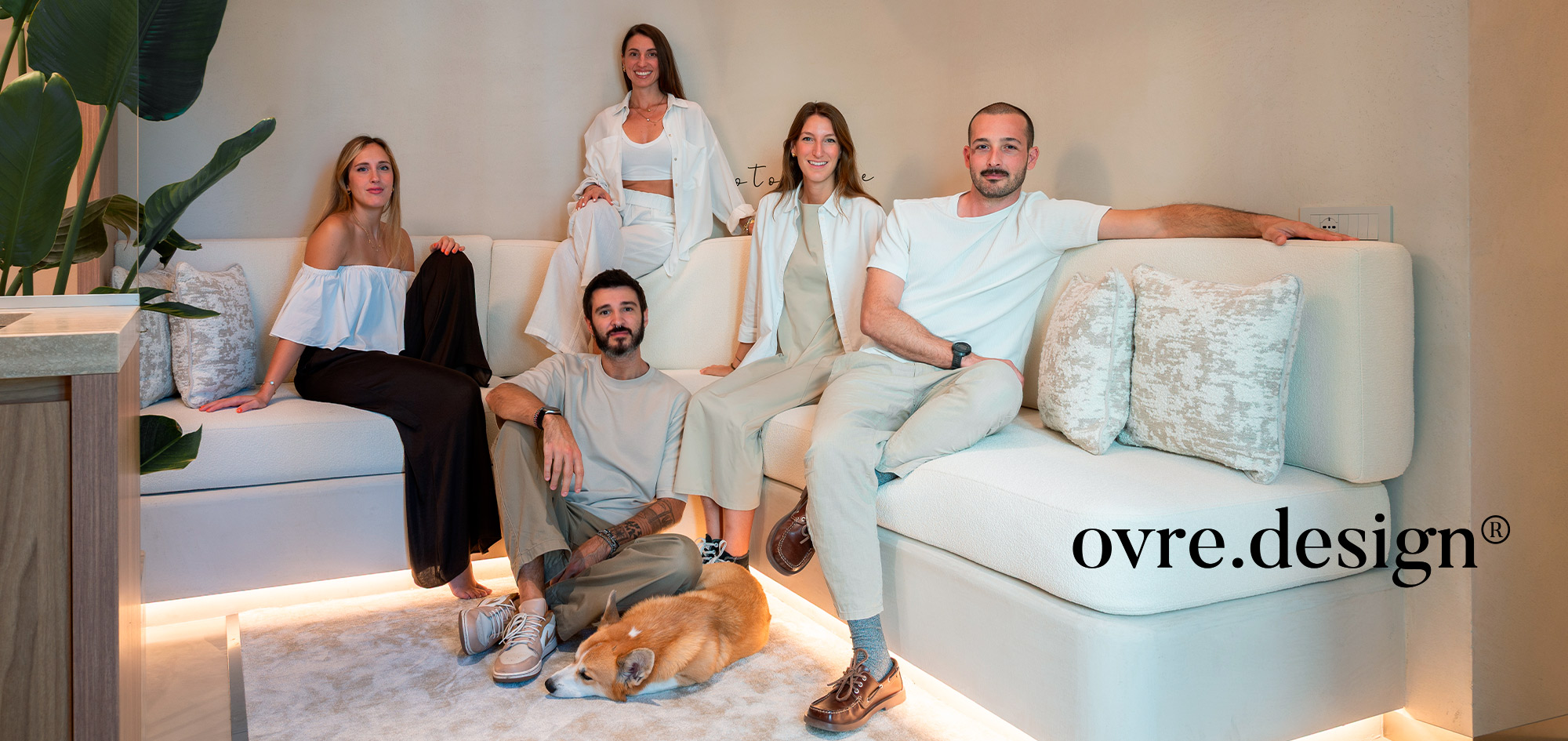
ovre.design interior design giulia delpiano corrado conti

Giulia Delpiano – Aesthetics also contributes to value creation

Founder and owner of ovre.design alongside Corrado Conti, Giulia Delpiano describes a creative practice that is simultaneously highly focused on economic returns for hotels, from the efficiency of spaces to the quality of the guest experience.

Giulia, could you describe ovre.design?

Our company focuses on creative strategies and interior design projects within the hospitality sector. All of us are architects specialized in interior design. We place a strong emphasis on the experiential value of interiors and, in turn, on the revenue they can generate for our clients hotel owners and operators.

We work strategically, ensuring that aesthetics are not just decorative, but also economically effective for our clients. Interiors set expectations: they attract guests to one hotel over another, define the hotel’s identity, and make it unique and recognizable, ultimately boosting revenue.

We focus on market positioning and on defining the target clientele. We oversee the entire creative direction of a project, developing experiences and services that culminate in the interior design itself. Which is essentially the final stage of a comprehensive strategic analysis.

During the actual interior design phase, we focus on the layout of functional spaces. In 99% of cases, we work on renovations, since much of our work in Italy involves historic or pre-existing buildings. For this reason, we pay close attention to space efficiency, always considering the guest experience—which clearly differs between a family hotel, a wellness hotel, or a business hotel. The layout must therefore align with the target audience and, of course, with the hotel’s identity.

After that, we handle the finishes: floors, wall coverings, colors, materials, and all the furniture, most of which is custom-designed by us. Generally, we only purchase chairs and lighting fixtures, because of long approval times, while everything else is specifically designed for each project.

Do you also handle the selection and placement of artworks?

Yes, absolutely. Our role continues until the hotel opens, and we also oversee the brand identity, from the logo to all aspects of the visual identity. Everything must be consistent with the overall design of the hotel. Artwork selection is an integral part of our work, both in terms of original art pieces and decorative elements such as accessories and other details that make the space feel alive. Art plays a crucial role in this and is fully integrated into the design process, because a space without artworks can feel unfinished.

Your studio has started a collaboration with Cinquerosso Arte. Could you give us some details?

We partner with Cinquerosso Arte because we strongly believe in specialization; it’s one of the key principles of our company. Everyone should focus on what they truly excel at. We specialize in a specific field and aim to provide our clients with excellence in that area, which means we seek out suppliers and professionals who can offer us highly specialized expertise in turn.

Just as I rely on LVT experts for flooring and expect them to provide the technical knowledge, I trust Cinquerosso Arte because they have outstanding expertise and a deep understanding of the art world. We started collaborating with them this year, and what impressed us immediately was their ability to grasp our communication needs, understand exactly what we are looking for, and offer us the best possible options.

Read the interview with Alessia Galimberti!

T O P
SHARE

E-SHOP

FOR ART LOVERS
Buy unique pieces, Fine Art prints and posters

GO TO E-SHOP

B2B

FOR ARCHITECTS AND DESIGNERS
Choose the perfect artwork for your project or ask for Art Advisory

GO TO B2B SITE
X

Sign up for our newsletter

Sign up for our newsletter and receive a 10% discount on your first order. Stay up to date and get all the news on Cinquerosso arte