Sign up for our newsletter and receive a 10% off
Send a gift card to your loved ones!
ambra piccin architetto cortina d'ampezzo

Ambra Piccin – Different client, the same passion for beauty

From luxury residences to hotels, architect Ambra Piccin creates spaces where indoor and outdoor environments flow seamlessly into one another, with a distinctive focus on the interplay between architecture and art.

Could you tell us about your professional journey?

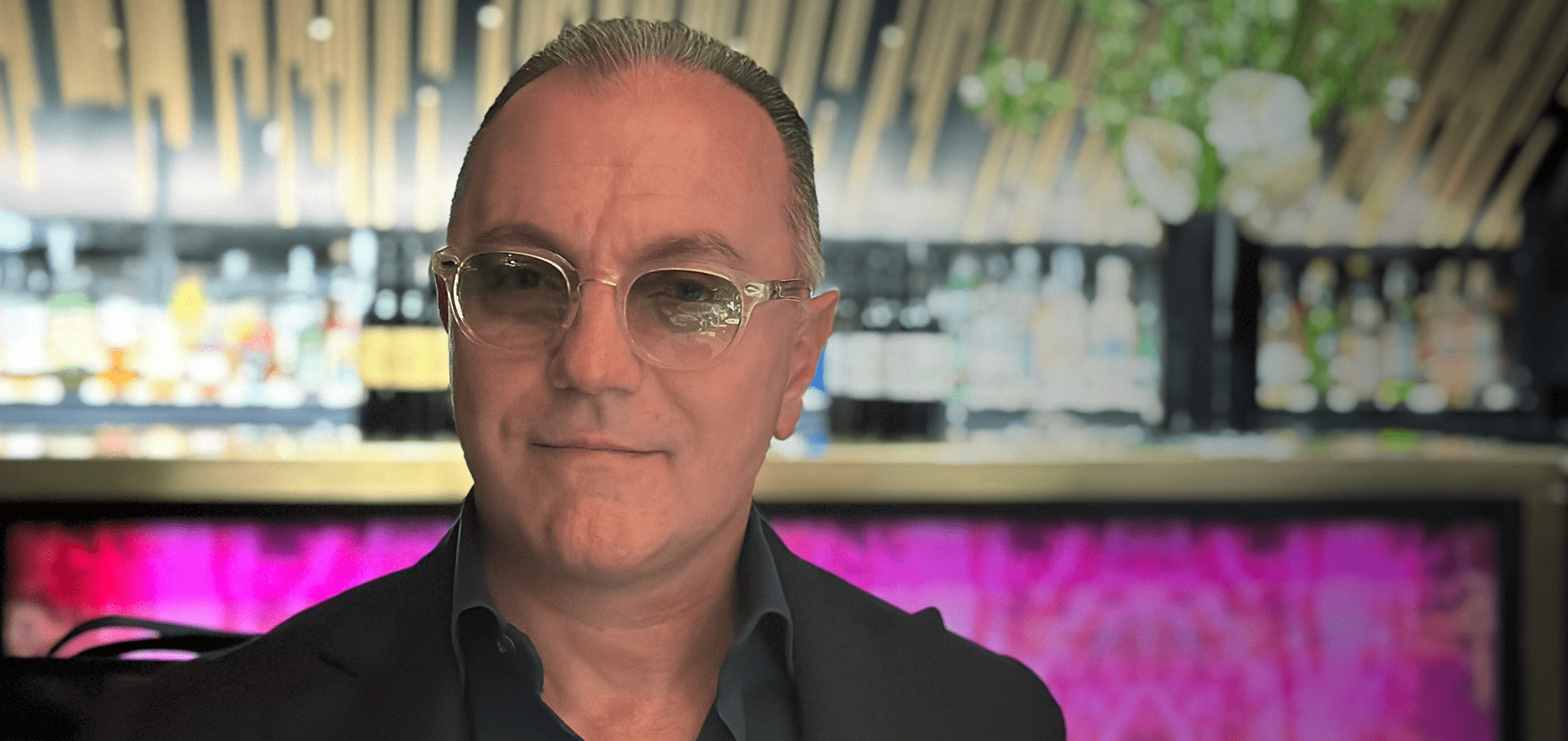
I was the first female architect to open a studio in Cortina d’Ampezzo, in 1991. It has been a wonderful journey, one that over time has allowed me to build a well-established practice. Today, with offices in Cortina, Milan and Venice, my firm is the largest in the area, bringing together a multidisciplinary team of professionals, including architects, engineers and technical specialists across various fields.

I focus particularly on complex architectural projects, which I also coordinate as project manager, from the initial idea through to completion and handover. We work on luxury residences, hotels, restaurants and hospitality spaces: different types of projects, all united by the same attention to quality and to the people who will experience these environments.

Over the years, we have expanded our reach, working throughout the Alpine region, including across national borders, and in various parts of Italy, not just in ski resorts. Today, we are increasingly working in smaller towns and lesser-known areas that are experiencing a period of rediscovery. Alongside major cities, there is growing interest in restoring and enhancing smaller destinations and inland areas, places rich in charm and potential.

What is the philosophy behind your studio’s work?

For us, it is essential to establish a strong understanding with our clients and translate their needs into a design that is in harmony with its setting and the people who will inhabit it. Over time, our client base has changed considerably.

In the past, we worked mainly with families looking to renovate their homes or build a second residence as a personal retreat. Today, our clients are much more diverse. In Italy, an increasing number of foreign investment funds are investing in real estate, particularly in the restoration and redevelopment of hotels. Italy has an extraordinary wealth of hotel properties, even in lesser-known destinations. These investors are looking for opportunities to enhance the value of these properties, with a growing focus on the quality of hospitality and the experiences offered to travellers.

Today, travellers are looking for more than just an exclusive or luxurious holiday. They also seek an authentic connection with the landscape and nature. This influences our design choices: we create large windows that frame the surrounding views, as well as loggias and terraces that allow guests to enjoy outdoor spaces and connect with the natural environment.

What role does art play in your projects? How does the dialogue between architecture, interior design and art take shape?

Here too, much depends on the client and the intended purpose of the project. In private residences, families often have specific artistic preferences and want to personalise their interiors with paintings and artworks that reflect their own tastes and sensibilities.

In Cortina, where property values are particularly high, many homes are also spaces for entertaining and hosting guests. The pursuit of beauty and quality is therefore central. The homes we design today often feature contemporary artworks, sometimes selected in collaboration with local galleries.

On occasion, galleries make artworks available to us so that we can assess how they might fit within the interiors. I believe that an artwork should not simply be beautiful; it should also have a meaningful connection with the space in which it is placed. Light, colours, materials and the proportions of the room all need to be considered.

Architecture should help enhance the artwork, just as the artwork should engage in a dialogue with the space around it. In the hotel sector, art also helps define a property’s identity and give its spaces a distinctive character. The selection of artworks needs to take into account the experiences of a diverse, often international, clientele and therefore follows different criteria from those applied to a private residence.

How did you first come across Cinquerosso Arte?

I first came across Cinquerosso Arte at UNFOLD.zone events, which focus on architecture, hospitality and luxury residences. These events offer valuable opportunities to meet and share a passion for beauty, exceptional spaces and quality design. I find Cinquerosso Arte’s decision to specialise in the hospitality sector particularly interesting. A gallery that understands the specific needs of hospitality can be a valuable partner for architects like us, helping us select artworks that are in harmony with the identity of the spaces and the guest experience.
Read the interview with Daniela Colli!

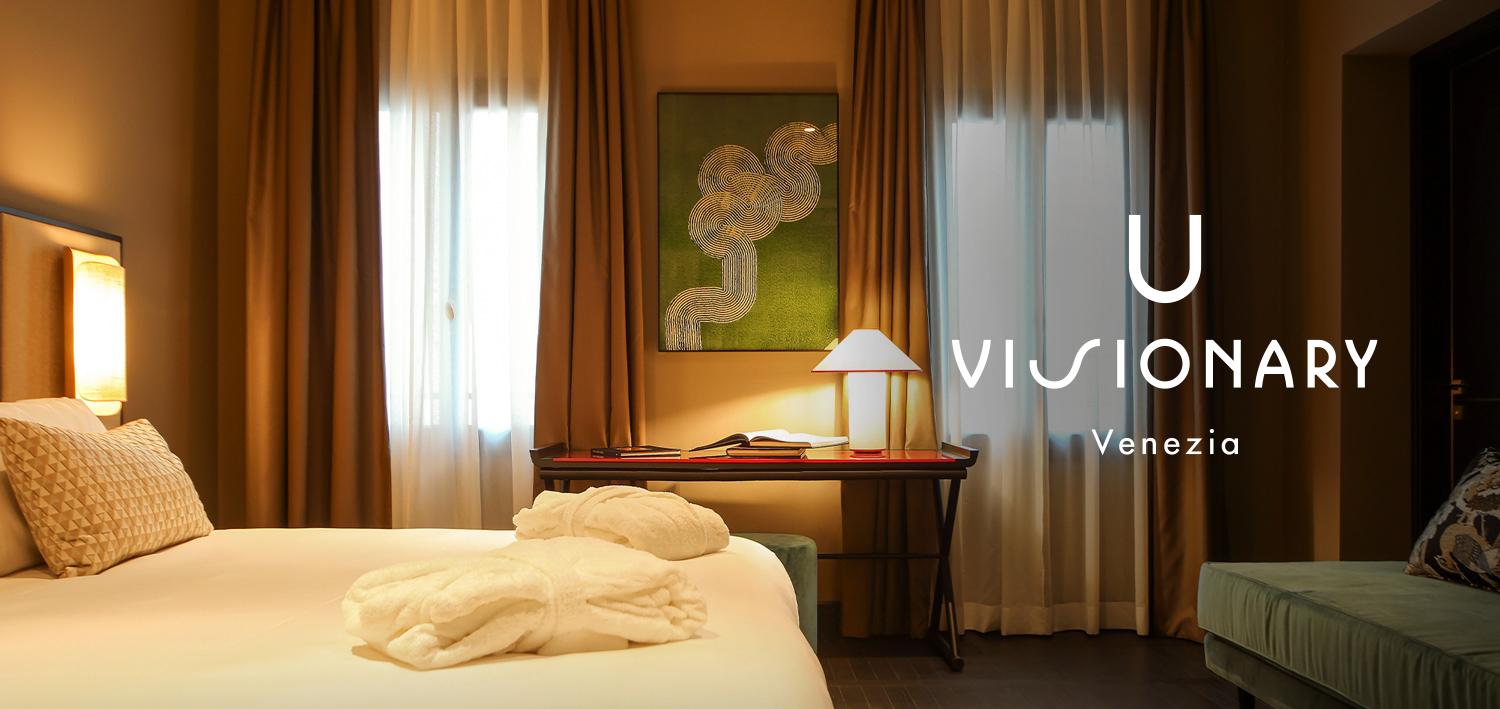
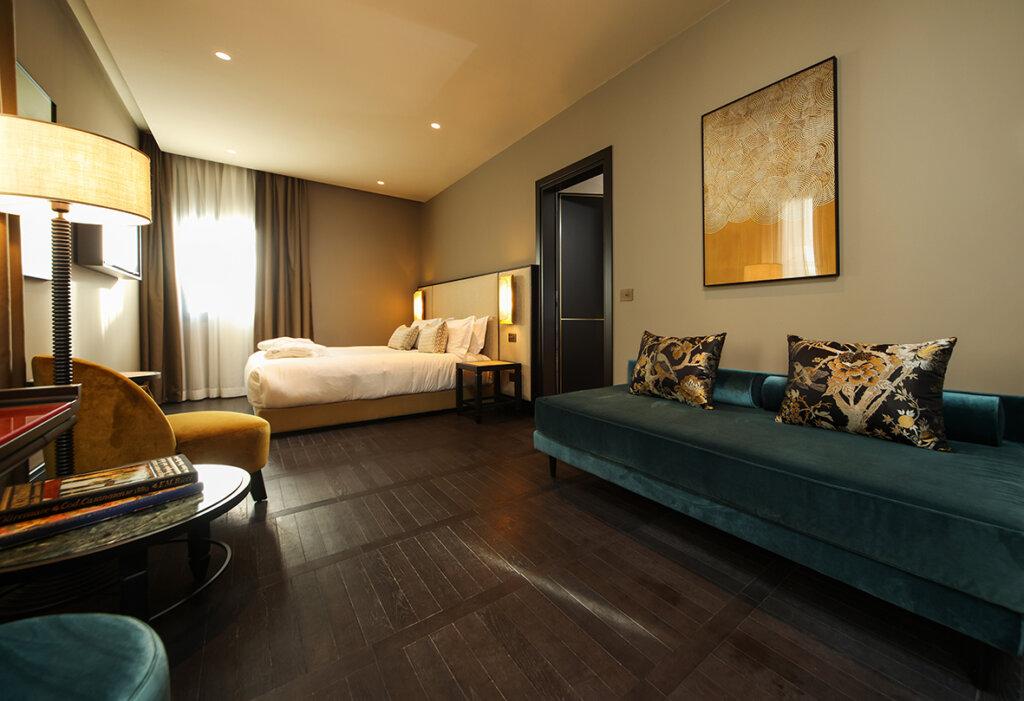
u visionary hotel venezia opere cinquerosso arte

U Visionary Venice, a luxury hotel with the touch of Cinquerosso Arte.

The elegance of a dream hotel with all the charm of a timeless city: U-Visionary Venice is the perfect example of how a artwork can fit into the concept of a prestigious interior design. 

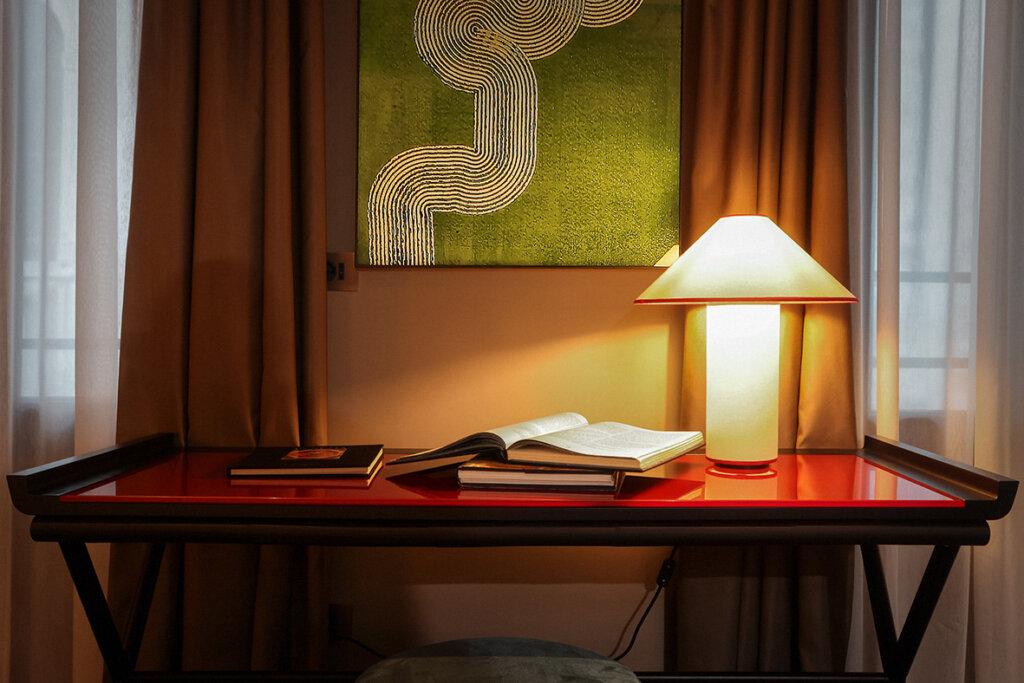
The dreamlike figures of Giulio Rigoni, the expressive geometries of Luca Brandi and the mysterious friezes of Icaro complete the interiors of the new luxury hotel opened in January 2025 in the Serenissima.

After U-Visionary Rome, designed to offer guests ‘a glimpse of eternity’, U-Visionary Venice is born, which instead opens its view to distant places. Visions of time and space, then, born at the behest of the entrepreneur Fabrizo Pacini: the intention is to take the visitor on a journey within the journey, in which the hotel stay is not just a stopover but an experience in itself.

Above all, the concept of U-Visionary Venice, designed by architect Daniele Chiocchio, revolves around the city’s role as a bridge between East and West. In the rooms we find a skilful fusion of the sober elegance of avant-garde design. Exotic suggestions that recall the voyages of sailing ships laden with spices, the tales of Marco Polo, and that crossroads of peoples and cultures that Venice has always been.

In fact, we find Icaro with his ‘Botales’: photographs of ancient batacchi representing creatures somewhere between the human and the animal world. Borderline figures like Venice itself. With their disturbing blacks and whites, Icaro’s images echo the mysteries and fascination of this city.

Giulio Rigoni also presents figures halfway between two worlds, but in his case we move into the territory between dream and reality. With arabesque architecture on elephant backs, and faces with indecipherable expressions, between Byzantine iconography and Renaissance portraiture.

In a project with such attention to detail, the choice of artwork was a key step: it was necessary to include artworks with their own character, which could be distinctive without being invasive.

In perfect harmony with the interior concept. Hence the choice of artists whose different styles and sensibilities take the observer on an ideal walk from the Venetian calli to the Far East.

Finally, Luca Brandi’s artworks, with their intersecting and interpenetrating lines, evoke the environments of the rising Sun. From the delicate forms of Zen gardens to the geometric shapes of Japanese home interiors. Each work, therefore, is a ‘Touch of Infinity’, to use the words with which U-Visionary Venezia presents itself.

Read the article on Fabrizio Pacini!

fabrizio pacini owner u visionary venezia

Fabrizio Pacini – A visionary entrepreneur in luxury hötellerie

U-Visionary Venezia, a luxurious and charming hotel near the Grand Canal, has opened its doors under the management of Fabrizio Pacini, an entrepreneur working between Rome and the Serenissima. In collaboration with architect Daniele Chiocchio, Pacini has chosen Cinquerosso Arte to curate a selection of artworks in perfect harmony with the hotel’s concept.

We take this opportunity to explore the connection between hospitality and art with a distinguished interlocutor.

Mr. Pacini, can you tell us your entrepreneurial background?

My journey began over 32 years ago. At the time, I owned a construction company, and before long, I became a general contractor specializing in turnkey hotel renovations. In this role, I built properties for third parties in Rome and across Italy, and for about ten years, I also served as the operational arm of Federalberghi Lazio.

In 2012, the construction sector experienced a major downturn, prompting me to make a change: instead of building hotels for others, I decided to do it for myself. At that time, I was in partnership with two other associates, and together, we developed several hotels with great success. Then came the generational shift—our children had grown, so we decided to divide the hotels and go our separate ways.

Today, I own three hotels in Rome and am currently developing a fourth. I also chose to open one in Venice, recognizing its strategic importance. Having hotels in both Rome and Venice places us in a strong position when negotiating with agencies worldwide. Now, we are working to finalize a deal that will allow us to open a top-tier hotel in the mountains soon.

Regarding the hotel in Venice, what is the concept that inspired you?

For U-Visionary in Venice, as for the one in Rome, I relied on my trusted architect, Daniele Chiocchio. And in realising this hotel, Daniele was inspired by Venice’s role as a gateway to the East. A role that is rooted in its history as a maritime republic, and that can be breathed in so much of its architecture. After personally reaching out to Francesca Fazioli, I directed Daniele to Cinquerosso Arte; we met Francesca, viewed the collection with her, and together chose the works that best harmonised with our concept.

What do you think about the relationship between Art and Hötellerie?

From a personal point of view, I am very sensitive to art. After all, I live in Italy, which has a very large part of the world’s artistic heritage, and I work between Rome and Venice, which in turn host a very large part of this heritage. From a professional point of view, this is a great opportunity: it means that we can also offer our guests a privileged window on beauty. Then there is the art that we bring into our facilities, as happened with U-Visionary Venice, or as happened in Rome, where we have been collaborating with an artist from a long time.

Our hotels are luxury structures where every detail is carefully considered, and the artwork must reflect the same high standard. Guests seek a sense of indulgence, and we strive to provide it: through our cuisine, our attention to comfort, even the scents that fill the space.

Art also plays a key role in this, as it helps to create pleasant feelings. As I often say, we often experience emotions without fully understanding why. A guest’s experience in a hotel works the same way: he may not realise what makes him feel so comfortable, but he simply does. And that is what really matters.

Read article on Alberto Apostoli!

T O P
SHARE

E-SHOP

FOR ART LOVERS
Buy unique pieces, Fine Art prints and posters

GO TO E-SHOP

B2B

FOR ARCHITECTS AND DESIGNERS
Choose the perfect artwork for your project or ask for Art Advisory

GO TO B2B SITE
X

Sign up for our newsletter

Sign up for our newsletter and receive a 10% discount on your first order. Stay up to date and get all the news on Cinquerosso arte