Sign up for our newsletter and receive a 10% off
Send a gift card to your loved ones!
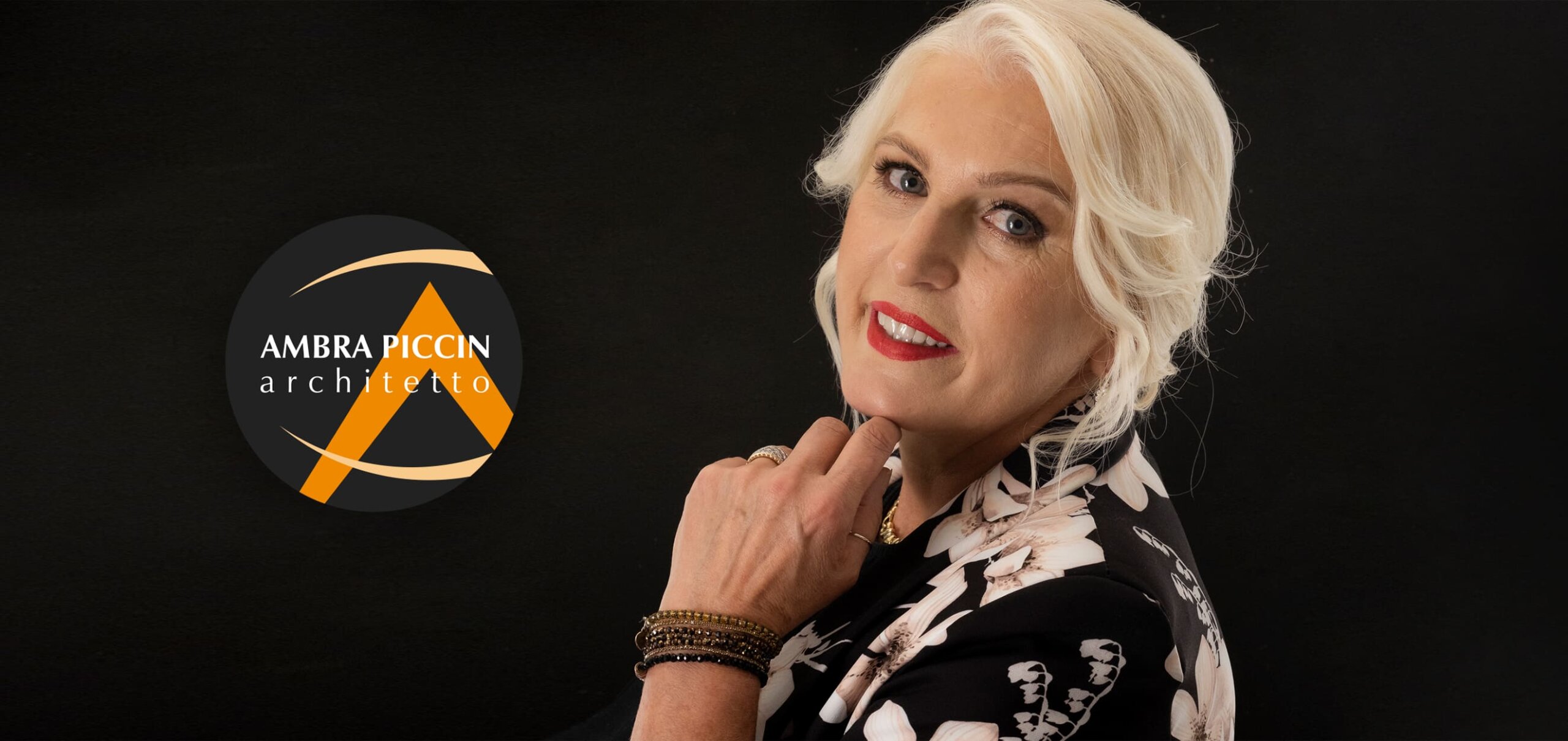
ambra piccin architetto cortina d'ampezzo

Ambra Piccin – Different client, the same passion for beauty

From luxury residences to hotels, architect Ambra Piccin creates spaces where indoor and outdoor environments flow seamlessly into one another, with a distinctive focus on the interplay between architecture and art.

Could you tell us about your professional journey?

I was the first female architect to open a studio in Cortina d’Ampezzo, in 1991. It has been a wonderful journey, one that over time has allowed me to build a well-established practice. Today, with offices in Cortina, Milan and Venice, my firm is the largest in the area, bringing together a multidisciplinary team of professionals, including architects, engineers and technical specialists across various fields.

I focus particularly on complex architectural projects, which I also coordinate as project manager, from the initial idea through to completion and handover. We work on luxury residences, hotels, restaurants and hospitality spaces: different types of projects, all united by the same attention to quality and to the people who will experience these environments.

Over the years, we have expanded our reach, working throughout the Alpine region, including across national borders, and in various parts of Italy, not just in ski resorts. Today, we are increasingly working in smaller towns and lesser-known areas that are experiencing a period of rediscovery. Alongside major cities, there is growing interest in restoring and enhancing smaller destinations and inland areas, places rich in charm and potential.

What is the philosophy behind your studio’s work?

For us, it is essential to establish a strong understanding with our clients and translate their needs into a design that is in harmony with its setting and the people who will inhabit it. Over time, our client base has changed considerably.

In the past, we worked mainly with families looking to renovate their homes or build a second residence as a personal retreat. Today, our clients are much more diverse. In Italy, an increasing number of foreign investment funds are investing in real estate, particularly in the restoration and redevelopment of hotels. Italy has an extraordinary wealth of hotel properties, even in lesser-known destinations. These investors are looking for opportunities to enhance the value of these properties, with a growing focus on the quality of hospitality and the experiences offered to travellers.

Today, travellers are looking for more than just an exclusive or luxurious holiday. They also seek an authentic connection with the landscape and nature. This influences our design choices: we create large windows that frame the surrounding views, as well as loggias and terraces that allow guests to enjoy outdoor spaces and connect with the natural environment.

What role does art play in your projects? How does the dialogue between architecture, interior design and art take shape?

Here too, much depends on the client and the intended purpose of the project. In private residences, families often have specific artistic preferences and want to personalise their interiors with paintings and artworks that reflect their own tastes and sensibilities.

In Cortina, where property values are particularly high, many homes are also spaces for entertaining and hosting guests. The pursuit of beauty and quality is therefore central. The homes we design today often feature contemporary artworks, sometimes selected in collaboration with local galleries.

On occasion, galleries make artworks available to us so that we can assess how they might fit within the interiors. I believe that an artwork should not simply be beautiful; it should also have a meaningful connection with the space in which it is placed. Light, colours, materials and the proportions of the room all need to be considered.

Architecture should help enhance the artwork, just as the artwork should engage in a dialogue with the space around it. In the hotel sector, art also helps define a property’s identity and give its spaces a distinctive character. The selection of artworks needs to take into account the experiences of a diverse, often international, clientele and therefore follows different criteria from those applied to a private residence.

How did you first come across Cinquerosso Arte?

I first came across Cinquerosso Arte at UNFOLD.zone events, which focus on architecture, hospitality and luxury residences. These events offer valuable opportunities to meet and share a passion for beauty, exceptional spaces and quality design. I find Cinquerosso Arte’s decision to specialise in the hospitality sector particularly interesting. A gallery that understands the specific needs of hospitality can be a valuable partner for architects like us, helping us select artworks that are in harmony with the identity of the spaces and the guest experience.
Read the interview with Daniela Colli!

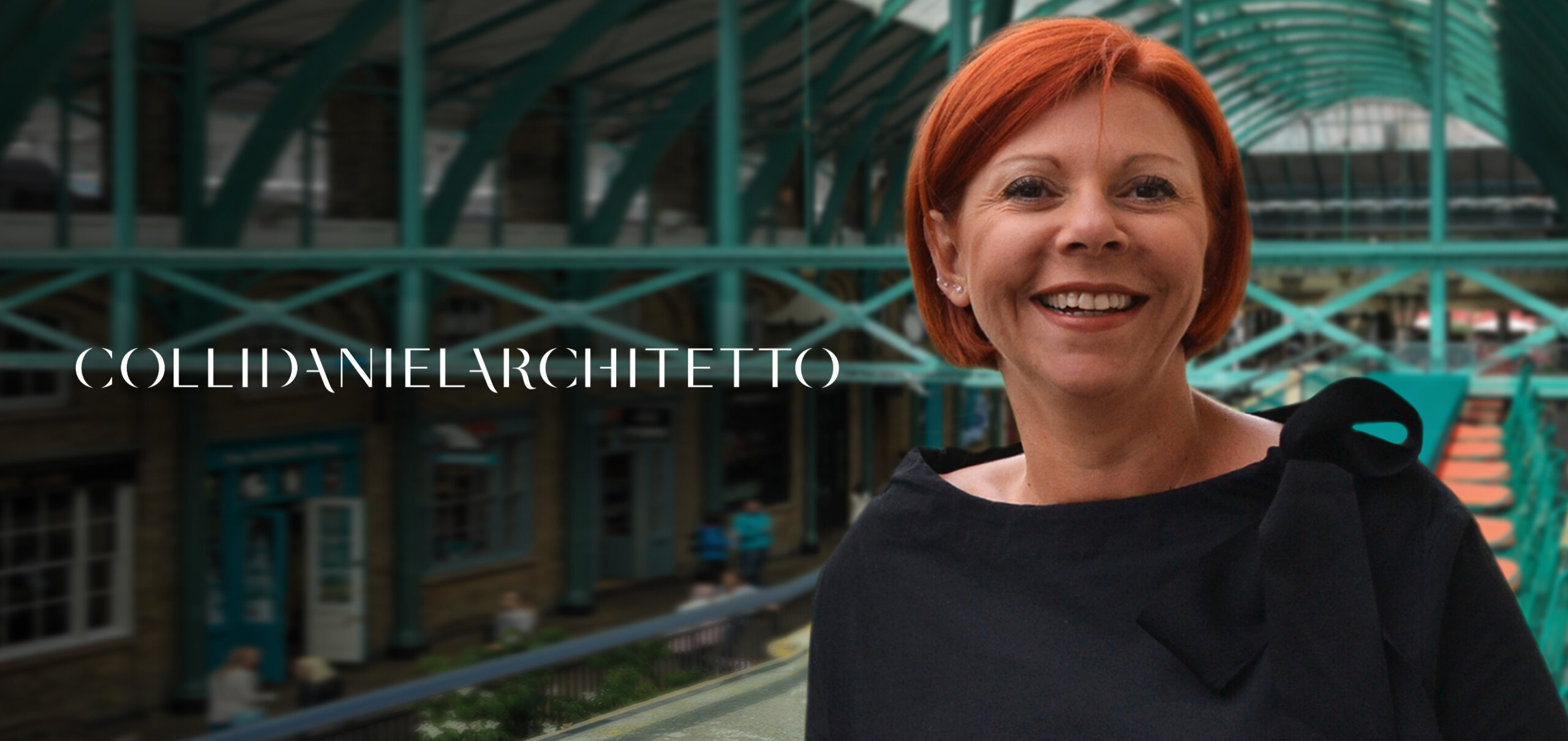
daniela colli

Daniela Colli: Every project is a contemporary spatial narrative

Daniela Colli began her career working on major railway stations across Italy. Today, her studio focuses primarily on hospitality projects: spaces defined by movement and transition, where making people feel welcome and creating a memorable experience is essential, with art playing its part.

Daniela, can you tell us how you came to work in interior design and hospitality?

I’m originally from Tuscany, but Rome has become my home. I graduated in Florence and went on to complete a master’s degree in London, initially planning to stay abroad. I then began collaborating with several Rome-based studios and major organizations such as Grandi Stazioni Retail S.p.A., working on the redevelopment and design of railway stations. It was an incredibly formative experience.
I was very young and suddenly found myself working on projects of considerable scale. At a certain point, almost by chance, I also started working in interior design, never imagining it would eventually become the core business of my studio. It all began with a few Italian-style bar projects, which later led to a collaboration with Nicolò Marzotto.
Together, we developed the VyTA brand around a clear idea: to appeal to a new kind of traveler, one who values quality, attention to detail and the pleasure of taking time to pause.

The station was no longer seen simply as a place to pass through, but as a space to be experienced, where architecture, the quality of the offering and a strong sense of place could come together.
I went on to work on numerous restaurant projects, followed by my first experiences in the hotel sector, which today accounts for a significant part of the studio’s work. We now collaborate with major hotel groups as well as independent operators, working on projects at different scales and levels of complexity.

What’s the specific focus of your work today?

What matters most to us is the ability to turn every project into a contemporary spatial narrative, shaped around the brand’s identity and how we envision its guests experiencing the space. We aim to design places that do more than simply welcome people. They should evoke emotions, surprise and, above all, leave a lasting impression.

Therefore this is fundamental to our approach creating memorable spaces is a complex process, as it depends on the interplay of countless design decisions: the strength of the context, and the way materials, colour, light, proportions and details relate to one another. Our aim is to bring all these elements together and find a balance that creates distinctive atmospheres, while remaining true to the brand behind each project. As a result the goal is to give spaces a character that feels authentic and stands the test of time.

How important is research to you?

Research is central to our work. We dedicate a great deal of time to it, always striving to design something that hasn’t been done before, or to reinterpret familiar elements in unconventional ways. The same approach applies to our choice and use of materials. We are constantly looking for new surfaces, something that hasn’t been seen before, as well as colours that go beyond current trends. I believe this is essential to creating projects that are genuinely innovative and stand the test of time.

Does art play a role in your work?

Yes, absolutely. Whenever possible, we also oversee the selection and curation of artworks.
For me, it’s essential that art be an integral part of the project, rather than something introduced at a later stage. It should help shape the identity of a space and create a deeper connection between the environment and the people who experience it.

Unfortunately, artworks are still sometimes selected separately from the design process, without meaningful involvement from the architect or interior designer. This can create a disconnect between the art and the space.

How did you first come across Cinquerosso Arte, and what was your impression?

I first met Cinquerosso Arte at the Hospitality Design Conference in Milan and was immediately interested in their approach to the relationship between art and interior design.

What particularly struck me was their vision of art not as an added element, but as an integral part of the design process. This is very much in line with my own approach: art should be in dialogue with architecture, the space itself and the identity of the hotel.

I also find their focus on emerging artists particularly interesting. This is important from the client’s perspective, too, as investing in artworks by already well-established artists can often be financially unfeasible.

The opportunity to champion emerging artists therefore creates a very interesting balance between quality, artistic research and investment.

Read the interview with Mauro Santinato!

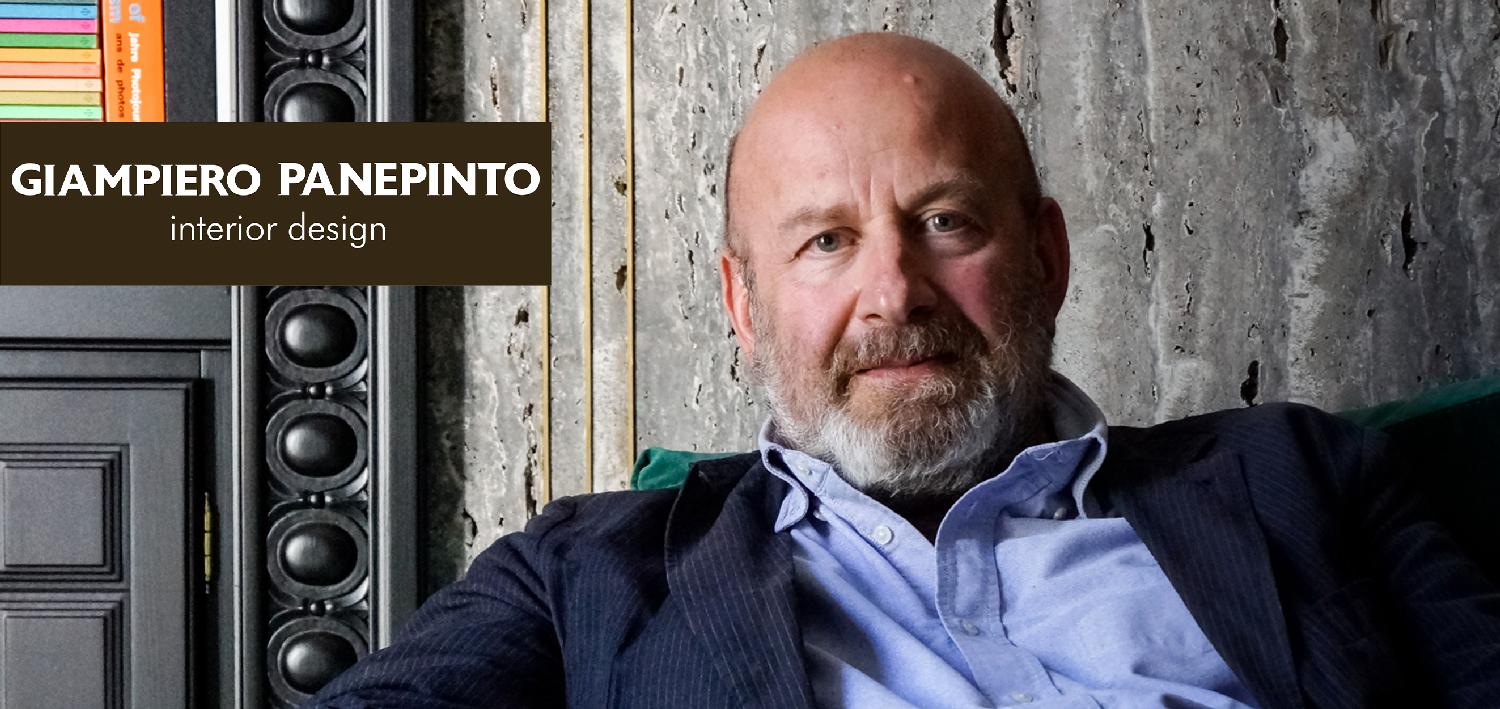
Giampiero panepinto architetto contaste

Giampiero Panepinto – I dress every hotel in a bespoke suit

An architect with a distinguished background in fashion design, Giampiero Panepinto crafts top-tier hotels with strong character and a deep harmony with their local context. His approach is literally “tailor-made,” with art playing a central, defining role in every project. 

Could you tell us about your professional background and the work your studio does? 

I studied at the Politecnico di Milano, where I graduated with a degree in architecture. During my first years at the university, I also began working in the fashion world, focusing on knitwear, and collaborated with Paolo Pecora brand for about ten years. 

I later launched my own label, Panepinto, which took me to the runways of Tokyo and earned me a place in the Encyclopedia of Fashion. This aspect still influences the way I work today: I have a meticulous, almost tailor-like attention to detail. I often say that while I may not be able to design a skyscraper from scratch, I can “dress” it, giving it character and elegance.

My studio is very small, there are five of us, and we mainly focus on interior design, with a strong specialisation in the hospitality sector.
We’ve worked on high-end hotels such as the Capri Tiberio Palace, the Leading Hotel Palazzo Roma, the Hotel Vilòn with its Adelaide restaurant, and Palazzo Shedir, another Leading Hotel spanning 1,500 square meters with only three rooms, hailed as one of the “seven wonders of Rome.” Currently, we’re overseeing the renovation of the Savoy Hotel & Spa in Paestum, including its Michelin-starred restaurant Tre Olivi.
We also handle international projects: a villa in Miami, a house in Noto, offices in Milan, and several apartments between Rome and Milan.

Is there a common thread running through your projects? 

Every project is unique to us. There is, of course, a common thread, but every hotel has its own identity, and we always try to tailor a bespoke look for it, using materials, colours and details that make it instantly recognisable.
Alongside our main work, we have also created the Contaste brand, through which we oversee everything that follows the actual project, such as staff uniforms, plants, decorations, music, table settings…

What role does art play in your projects?

Art plays a fundamental role because it helps shape the identity of a place. In many projects, we try to create real visual journeys. For example, at Palazzo Roma, we decorated the different floors of the hotel with distinct themes: popes, philosophers, and astronomers. In the corridors, we introduced references to La Dolce Vita, with images of paparazzi, Federico Fellini, Sergio Leone, Alitalia, and the Fontana sisters. 

The goal is to leave a strong impression on guests who stay at the hotel. Nowadays, it’s difficult to find places that truly remain in people’s memories; we try to achieve this through art as well. We acquire photographs from galleries or online, and we collaborate with artists and photographers to create bespoke works. At the same time, we always aim to maintain a strong connection with the local context: whether we are working in Sicily, Miami, or Ibiza, we enjoy involving local artists and reflecting the spirit of the place in the project. 

What do you think about Cinquerosso Arte?

I met Francesca Fazioli through mutual friends, and that’s how the idea of collaborating came about. I must say that choosing a piece of art is always very personal for me: I don’t buy paintings for their financial value, but because they convey something and align with the project I’m developing.

Whenever I work on a project, I look for objects, artworks, or images that can enter my world and interpret it in the right way. If a proposal manages to capture that spirit, then it can work, regardless of its origin. For me, the most important thing is that there is coherence between the artwork, the space, and the overall design concept. 

Read the interview with Giovanni Franceschelli!

simone gheduzzi

Simone Gheduzzi – “Architecture is inhabited art”

President of diverserighestudio and a member of the Public Art Commission, architect Simone Gheduzzi is above all an intellectual who forges connections between knowledge and artistic forms. Transforming them into architecture with one guiding conviction: the experience of space must allow to explore an elsewhere.

You are participating for the fourth time in the Venice Biennale of Architecture. What defines your architectural studio?

Also in the project Italia Infinita 2075, which you can visit at the Italian Pavilion curated by Guendalina Salimei, you will see that what sets us apart is the multidisciplinary research that precedes the design phase. We don’t just analyze a few case studies; we take the necessary time to explore the subject from lateral perspectives and in dialogue with the client.

This work—moving between memory and the future, bringing art and science back together—allows us to propose a holistic vision (as in the days of the quadrivium), in which the Client plays an active role rather than simply being a recipient of proposals.

We have always stood out for a certain predisposition—indeed, a real need—to engage with other disciplines, other perspectives beyond architecture. To quote Carmelo Bene, whom I admire deeply as an artist: “You cannot make architecture from architecture”—just as you cannot make dance from dance, or music from music. That is the critic’s work. Our work, as creators, is to remain attentive, able to sense forces, interpret them, and give them form. After all, as Paul Klee once said: “Art does not reproduce the visible; rather, it makes visible what is not always so.”

This way of being requires a profound attentiveness to the reality around us; it becomes a way of life. One must be a work of art in order to create an artwork. That is the condition that distinguishes truly gifted creators from those who, though diligent and determined, spend their lives striving to resemble the former while in fact leading a more conventional existence.

Who are your typical clients?

The research carried out by our studio has attracted clients who are in tune with our spirit. Today, much of our work is for philanthropic foundations that use architecture as a means of communicating their benevolent aims.

These foundations believe that architecture is a tool for education, capable of creating identity within spaces and of giving back to the people who inhabit them a higher quality of life. This is not limited to the cultural sphere—as in the case of Fondazione Golinelli in Bologna, with whom we have been collaborating since 2013.

At present, for instance, we are working at the Policlinico Sant’Orsola hospital for the Fondazione Policlinico Sant’Orsola, which has adopted the payoff “the healing space” in the projects we are developing together. Scientific evidence shows, in fact, that patients respond better to therapies when they are in environments that strive for beauty and open up the imagination.

What role does art play in this?

It’s a very broad subject, because architecture is both an artistic and a scientific discipline, yet it has a unique trait: architecture hosts all the other arts. Since classical times, architecture has been conceived together with works of art, which were not mere additions but—using a parallel with rhetoric—sometimes its grammatical and syntactical structure, and always its figurae, its punctuation. When we imagine a space, we envision it with this idea of a profound relationship between architecture and art.

To explore this even further, I also opened a gallery within an architectural context, called PIETRO, where I live alongside people who create works of art, and where I continue a path that began earlier with another cultural association called lasantabarbara. I involved many professionals and artists who took part in the “operation of meaning” that precedes form in the context of specific projects.

What do you think of Cinquerosso Arte?

When I first came across Cinquerosso Arte, I saw it as a great opportunity for young artists. In our country, it is far from easy for an artist to find a position from which to fully develop their potential. Cinquerosso Arte allows these artists to express themselves not only through exhibitions, but also by providing the opportunity to sell their works and be part of a tangible creative network. For the youngest artists, it can even be the first step into the professional world—and therefore into artistic expression—laying the foundation for a career.

Read the interview on Laura Verdi!

laura verdi architetto teamwork

Laura Verdi – Sustainability means wellbeing, for the planet and for people

Architect and journalist Laura Verdi has been one of the driving forces behind the MODE project and, before that, DEMO—two boutique hotels that have transformed the hospitality scene in Rimini and beyond.

Could you tell us about your background?

I graduated in Architecture from the Politecnico di Milano and, driven by my passion for writing, I have always collaborated with architecture magazines, over the years. I am currently the Editorial Director of we:ll magazine, which focuses on the hospitality sector, and I continue to practice as an architect.

Could you tell us how the MODE project was born and what role you played in it?

MODE was born following the experience of DEMO, another boutique hotel in Rimini I collaborated on. Both projects were conceived by Mauro Santinato, President of Teamwork, the largest hospitality consulting firm in Italy.
The innovative idea behind DEMO—and later MODE—was to bring together different architecture studios and give each one complete creative freedom in designing the suites and common areas. In the case of DEMO, the brief was to interpret the concept of hospitality.

On that occasion, I had the pleasure of coordinating my colleagues as project manager, in addition to designing a ground-floor space called Drama. DEMO was a great success—in 2025, Tripadvisor ranked it among the top 1% of hotels worldwide. And on Booking.com it was the highest-rated hotel in Rimini. Moreover, within a year, over 100 articles about DEMO were published in industry magazines.
Building on this success, MODE was born. This time, the 13 architecture firms involved were tasked with interpreting the concept of sustainability. Each architect brought a unique perspective, avoiding repetition or clichés—unsurprising given the prestige of the firms involved.
As for me, I took on the roles of artistic director, project manager, and architect for MODE.

What is your interpretation of the theme of sustainability?

I believe in a comprehensive approach to sustainability, one that goes beyond greenwashing and is grounded in a global vision. Sustainability isn’t just about using natural materials and demonizing plastic—in fact, according to circular economy principles, we need to consider the entire product lifecycle. That’s why for MODE we chose only products certified with an Environmental Product Declaration (EPD). Materials like aluminum or PVC, which can be recycled, are therefore very welcome.
Above all, sustainability for me encompasses two key aspects: on one hand, the environmental impact meaning the use of recycled materials and resource conservation. On the other, the wellbeing of people.

For MODE, I designed the entrance, the ground-floor bathroom, the laundry area, and all vertical connections—namely the stairs and elevator. My project is called ‘Stai Cozy in una Second Life,’ a play on words blending Italian and English that reflects the dual focus on environmental sustainability and wellbeing.
I selected carpets made from plastic recovered from the oceans, while also prioritizing acoustic comfort by using sound-absorbing materials to reduce echo in the common areas, which can be uncomfortable for guests.

Also focusing on personal wellbeing, I studied biogeometry—shapes that influence people by creating a sense of harmony with their environment—and incorporated biogeometric sinusoids into a reclaimed wood paneling at the entrance.
Similarly, a stunning mosaic featuring the colors of the sea and sky was crafted from tile scraps, and the felt used for the lamps in the bathrooms is made from recycled plastic.

You selected artworks from Cinquerosso Arte for the spaces you designed—what guided your choices? 

The concept behind these spaces is deeply connected to nature—not only because sustainability often brings nature to mind, but also because nature is a source of wellbeing for people. That’s why I wanted to incorporate floral geometries, such as covering the ceiling with wallpaper depicting a field of poppies, or another unique wallpaper designed by my colleague Gian Paolo Venier of Otto Studio, which shows a cross-section of a cabbage leaf. The bathroom lamps, designed by Egoluce, are called Flower, and for the entrance I chose Anaconda—an iconic lamp resembling a vine, also by Egoluce.
This is where Cinquerosso Arte comes into play: for the common areas, I selected floral-themed artworks by Marcella Fierro, Silvia Lisotti, and Rocco Casaluci, to enhance the immersion in a natural environment and bring that extra something that only art can offer.

What exactly does this ‘plus’ consist of, and how important is it in the hospitality sector?

The hotel sector is increasingly embracing artistic solutions within its spaces—partly to stand out, and partly because beauty appeals to everyone. And Art is beauty in its purest form. Today, more than ever, people with a certain sensitivity notice harmony; they perceive beauty. Often, may not even know exactly what they are looking at, yet something strikes them as unique. Some may choose to delve deeper, to discover more about the artist, while others simply absorb the atmosphere—but in either case, the message comes across and leaves them with a sense of well-being.

This, for me, is also what sustainability means: the well-being of the planet and the well-being of people.

Today, in the hospitality world, some offer yoga sessions, others focus on spas or fine dining with green and organic products… These are growing trends, and art is very much part of this movement, because it has the power to make people genuinely feel good.

Read the interview on Emanuele Svetti!

Daniele chiocchio integra design architetto

Daniele Chiocchio -The harmony of the whole in the hôtellerie

Events, exhibitions, interior design: architect Daniele Chiocchio directs the relationships between architecture, art and public spaces with confidence and skill.

In 1999, my partner Valerio Gini, also an architect, and I founded Integra Studio, which later became Integra design and is based in Rome. Our activity runs on two parallel tracks. The first is that of major events. We have realised many of them and of different types, in Italy and around the world: automotive and sports events, corporate events for large companies, and art-related events, including large exhibitions.

The second track is that of the hôtellerie, which includes everything related to the hospitality and F&B sector, so not only hotels but also spas and wellness, restaurants and cocktail bars. Since 2012 we have realised many interiors for hotels, but not only. In fact, we take care of everything, starting from concept and preliminary design to executive design and art direction, right through to interior design in every detail.

So the your work is deeply connected to art…

Yes, certainly. You could say that we were born this way, in the late 1990s and early 2000s: we started with exhibit design and events, with exhibitions of great appeal, like the one on the Expressionists at the Vittoriano in Rome. Even with a different slant like those on Moto Guzzi, the Beatles, Fellini, and Audrey Hepburn at the Ara Pacis.

It is also to be said that along the way we have broadened and deepened our skills by teaming up with professionals who deal with light design, projections, technology at the service of large events, and for installations. Even art installations, so much so that we have worked on video mapping when they were still little known, in places such as Palazzo Vecchio, in Florence, or Montecarlo for Ferrari.

Let us therefore say that art, understood in its broadest sense, often comes into play in our work, in a transversal way.

In this sense, can you tell us about the experience of U-Visionary Venice?

The inclusion of artworks, or at least artistic images, within hotel structures is always a delicate matter. In the case of U-Visionary Venice, we had a strong theme: we started from the city’s role as a gateway to the East, with its history of travel and exchange. We were inspired by this for a whole series of interior design elements: furnishings, fabrics, details, quotations… Therefore we needed something exotic, in the broadest sense of the term: something that had somewhat evocative characteristics but that could be purchased in large numbers.

In a hotel, which on average has 30, 40 rooms, in most cases you can’t buy individual pieces for large numbers. This is why we found Cinquerosso Arte’s proposal very interesting, with its very high quality reproductions.

We have chosen three artists. One is Giulio Rigoni, with his dreamlike images, rich in exotic elements. In his illustrations, I found connections with Venice, both in the images as a whole and in the many iconographic elements. Then there is Icaro, with his Botales: photographs of batons representing half-human, half-animal figures. Recalling the mysterious and fascinating atmosphere of this city.

And then there is Luca Brandi, and in his case we chose works with geometric designs and palettes that perfectly match the overall design, but which above all have an interesting element. They are very “comfortable”, they evoke a feeling of calmness that also recalls Asian culture. I am thinking for example of Zen gardens with their lines drawn in sand, whereas here they are drawn in colour.

You were mentioning that the relationship between art and hôtellerie is rather delicate. What are you referring to?

Yes, it is delicate because you have to try to characterise the rooms but at the same time find the right balance with the other furnishing elements. The artwork has to be interesting and blend well with the design context, without weighing it down.

A hotel is not an exhibition space, it is not a museum. The artwork should not be the protagonist but fit in organically and harmoniously. So there is a question of relationship and proportion. Cinquerosso Arte, with its extensive gallery, allowed us to identify artists and pieces in tune with the concept, which would fit in and perfectly complement the overall design.

Read the article on Francesca De Pieri!

T O P
SHARE

E-SHOP

FOR ART LOVERS
Buy unique pieces, Fine Art prints and posters

GO TO E-SHOP

B2B

FOR ARCHITECTS AND DESIGNERS
Choose the perfect artwork for your project or ask for Art Advisory

GO TO B2B SITE
X

Sign up for our newsletter

Sign up for our newsletter and receive a 10% discount on your first order. Stay up to date and get all the news on Cinquerosso arte